

By the end of a twelve-hour nursing shift, my lower back is done. That is just the reality of the job. What I did not expect was that my two hours of evening charting from home would make it worse. For almost a year I was sitting in a plain wooden kitchen chair, hunched over my laptop on a folding table, and by 10 PM I was reaching for the ice pack every single night. I kept telling myself a chair was too expensive, that I could manage. Then I finally caved and bought the GABRYLLY ergonomic office chair. That was eight months ago, and I want to give you the real story, not just the highlights.
I should say upfront: I am not a gear reviewer by trade. I am a nurse who works from home in the evenings, deals with a tight budget, and spent a lot of time reading reviews before spending real money on a chair. So this review is written for people in my situation, not for people with a standing-desk-and-gaming-chair setup who are comparing high-end brands.
The Quick Verdict
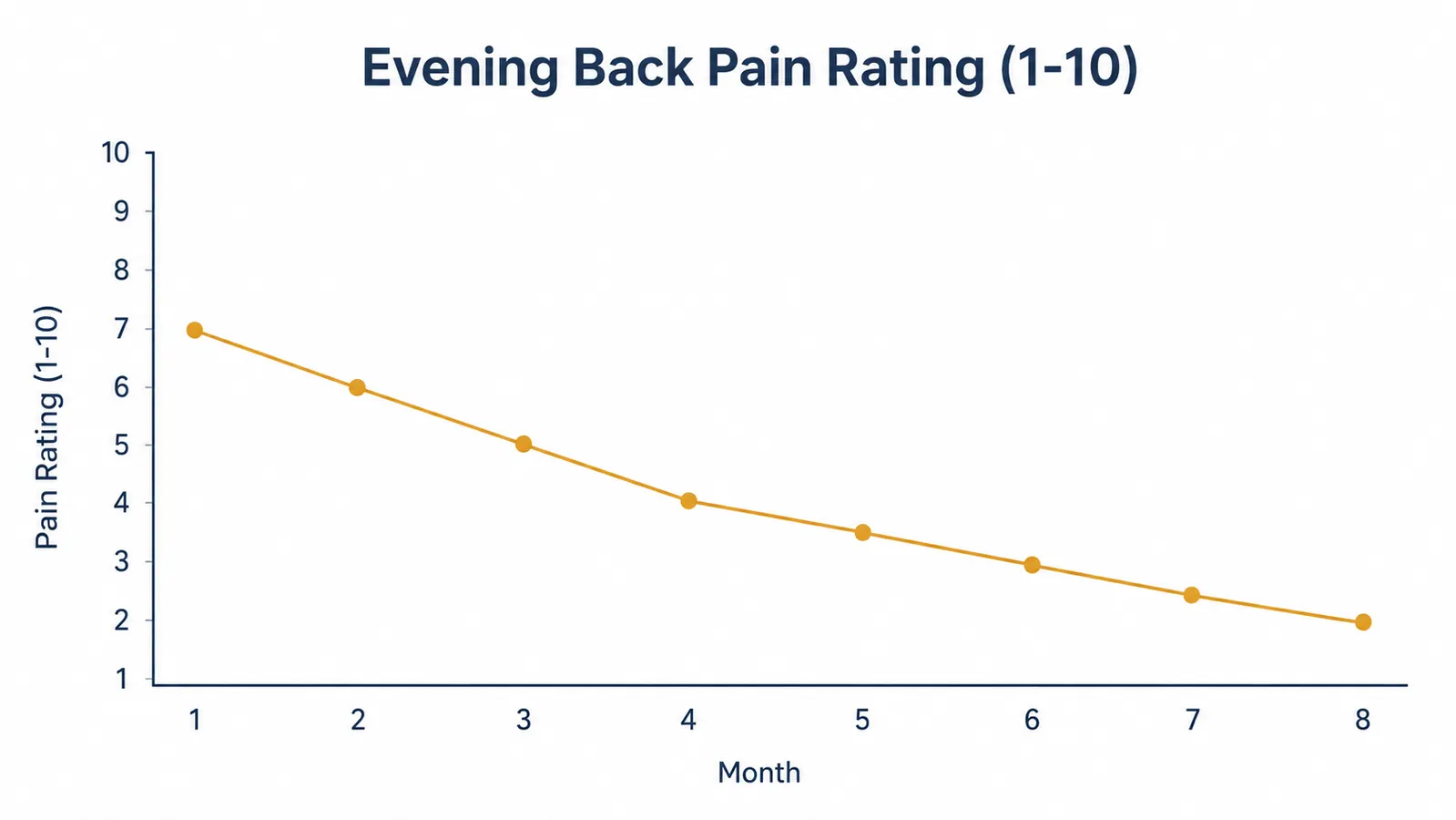
The GABRYLLY does what it promises at a price that does not require much justification. The lumbar support is real, the flip-up arms are genuinely useful, and my evening back pain dropped from a seven to a two within the first six weeks. The main caveats are the assembly time, the seat depth fitting shorter users slightly less well, and a headrest that needs fiddling to find the right angle. For anyone whose back hurts after long screen sessions, this chair is worth serious consideration.
Amazon Check Today's Price →If your back hurts every evening, this is the chair to check first.
The GABRYLLY has over 14,000 reviews and a 4.5-star rating. It is one of the most-reviewed ergonomic chairs in this price range on Amazon. Worth checking current pricing before it changes.
Amazon Check Today's Price on Amazon →How I Have Used It Over Eight Months
My setup is a corner desk in my bedroom. I sit there every weeknight from about 8 PM to 10 PM doing patient charting, catching up on emails, and occasionally doing continuing education modules. On my days off it gets more use, sometimes four to five hours in a stretch. On the weeks I pick up overtime I am sitting there closer to midnight, tired and already stiff from being on my feet all day. So the chair sees real time in it, under real conditions, not occasional weekend use.
When it arrived I spent about 45 minutes assembling it. The instructions are decent, though the step showing how to attach the backrest could be clearer. I had to re-watch a YouTube video for that part. Once built, it felt solid. No wobble, no creaking. I set the seat height so my feet are flat on the floor, adjusted the lumbar pad to sit right at the curve of my lower back, and flipped the armrests down. That first evening I noticed something right away: I was not constantly shifting to get comfortable. That shifting had become so normal I had stopped noticing it.
By the end of week two, I stopped reaching for the ice pack after charting. That alone was worth the purchase price.

The Lumbar Support: What Actually Changes
The GABRYLLY has an adjustable lumbar support that slides up and down on the backrest. I want to be specific about this because generic 'lumbar support' in chair marketing often means a small foam bump that does not do much. This one actually does something. The pad has a firm but not hard feel, and because you can reposition it vertically, you can get it right at the spot where your lumbar spine curves inward rather than guessing.
For me, that sweet spot is about three inches above the seat cushion. When the pad is there, it stops me from slumping forward into the position that loads my lower back discs. For context, if you want to understand why this matters at a structural level, the guide on our site covering a step-by-step guide to fixing lower back pain when working from home goes into the mechanics in much more detail. But the short version is: the lumbar curve collapses when you sit in a chair that does not support it, and that collapse is where the pain comes from.
After four months of using it daily, I tracked my pain level on a simple 1-to-10 scale. Month one average was around a six or seven in the evenings. By month four it was a three. By month seven it was sitting at one or two most nights. That is the kind of result I was hoping for but did not fully expect to see.
By the end of week two, I stopped reaching for the ice pack after charting. That alone justified the price for me.
The Armrests and Seat Depth: The Details That Matter
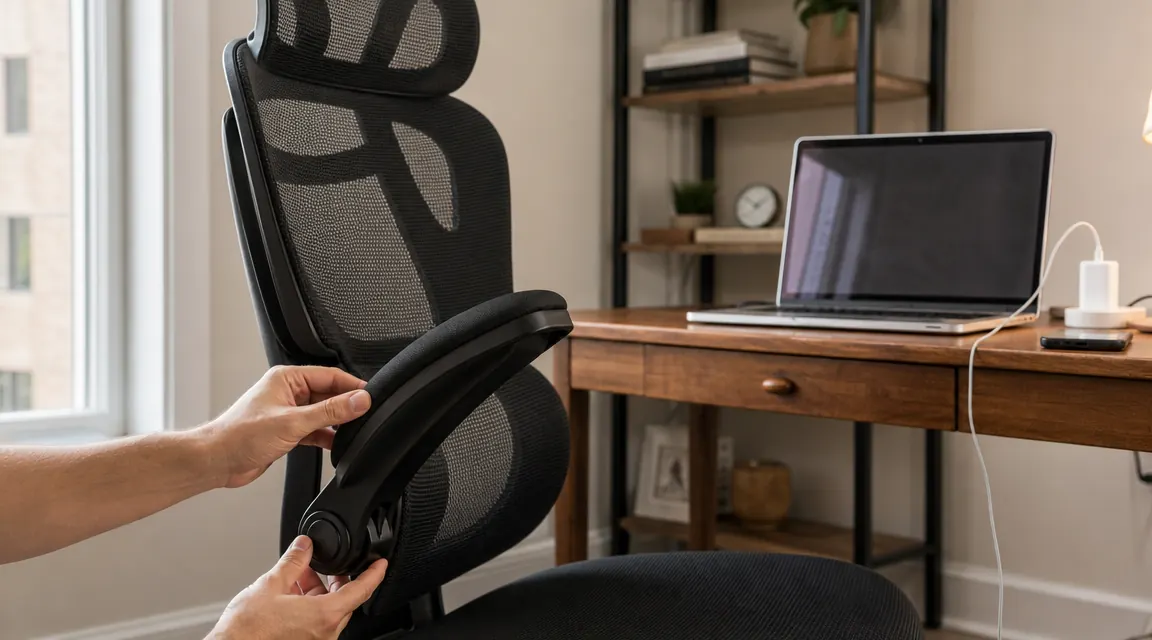
The flip-up armrests are one of the features I use most, even though I did not think I would. When I am typing I keep them up and out of the way. When I am reading back through notes or waiting for a page to load, I flip them down and rest my forearms. It sounds like a small thing but having that option rather than fixed armrests that are either in your way or not there at all is genuinely useful. I spend a lot of time in the chart reviewing rather than actively typing, and the ability to switch posture quickly is something I notice every single session.
Seat depth is where I want to be honest about fit. I am 5'4" and the seat is on the deeper side. Ideally when seated, you want two to three inches of clearance between the front edge of the seat and the back of your knees. For me it is just barely that. Taller users will probably find the depth just right. If you are under 5'3" or have shorter legs, I would factor that in. The tilt tension adjustment does help compensate by letting you lean back slightly so your body weight redistributes, but the seat depth is fixed.
The seat cushion itself has held up well. At eight months it has not developed the sunken, compressed feeling that cheaper chairs get within a year. The mesh back breathes well too, which matters for evening use when you have been in scrubs all day and just want airflow.
The Headrest: Takes Some Fiddling
The headrest is adjustable in both height and angle, which is good in theory. In practice it takes a few sessions to dial in. I found the angle adjustment a bit stiff on mine, and the range is not huge. Once I found the position that supports the back of my skull without pushing my chin forward, I stopped adjusting it. But I will be honest that it took me about two weeks of tweaking before I landed there.
If you are someone who does not use a headrest at all and tends to sit upright rather than recline, this is less important. I lean back when I am reading longer documents, so for me the headrest matters. For pure upright typing work, it is a secondary feature.
Build Quality After Eight Months
Nothing has broken. No squeaking when I adjust the tilt. No loosening at the joints. The gas cylinder still raises and lowers smoothly. The mesh has not frayed or stretched visibly. For a chair in this price range, that durability record over eight months of regular use is genuinely reassuring. I was skeptical when I first assembled it because the packaging felt a bit flimsy, but the chair itself feels more substantial than the box suggested.
The base and wheels are solid. I have the chair on a hardwood floor and the wheels roll without scratching. I have seen reviews mentioning that the casters can scuff floors, and I did not get a chair mat initially, so that was a risk I took. No damage yet, but if you have delicate hardwood or LVP you may want a mat to be safe.
One thing worth noting: the 14,000-plus reviews on Amazon give me more confidence in this durability than my eight months alone would. A product with that many reviews and a 4.5-star average has had enough users to surface real problems. The issues that come up repeatedly in negative reviews are mostly about assembly confusion and the headrest difficulty, which matches my experience. Structural failures or premature wear are not common complaints.
What I Liked
- Adjustable lumbar support that actually reaches the right position for most adults
- Flip-up armrests are genuinely versatile rather than a gimmick
- Mesh back provides real airflow, noticeably cooler than foam-back chairs in warm rooms
- Solid construction with no creaking or loosening after eight months
- 14,000-plus reviews give reliable signal on common issues before you buy
- Seat cushion has not compressed or flattened with daily use
Where It Falls Short
- Assembly takes 45 to 60 minutes and the backrest step is not clearly illustrated
- Seat depth runs slightly long, less ideal for users under 5'3"
- Headrest angle adjustment is stiff and takes several sessions to dial in
- At current pricing it is a meaningful purchase, not an impulse buy
Alternatives I Considered
Before buying I looked seriously at the Hbada ergonomic chair, which comes in at a lower price point and has strong reviews of its own. I ended up choosing the GABRYLLY primarily because of the adjustable lumbar support position and the flip-up arms, neither of which Hbada offers at the same level. If you want to see a full side-by-side breakdown, the comparison piece on how it compares to a popular alternative covers the differences in detail.
I also considered spending more on a mid-range Herman Miller alternative, but honestly at the price difference I could not justify it for evening home use. The GABRYLLY solves the specific problem I had. It does not need to be a luxury chair to do that job.
Who This Chair Is Right For
If you are working from home for two to six hours a day on a budget that makes you want to think carefully before spending on a chair, this is the one I would point you to first. It is especially well suited for people who have noticed lower back fatigue or pain building over weeks of home office work, because the lumbar support and tilt system directly address that pattern. If you want to understand the full picture of why back pain develops in home office setups and what else you can do about it, the ten specific reasons an ergonomic chair helps with back pain is worth reading alongside this review.
It is also a good fit for people who sit in different positions throughout a session, sometimes typing upright, sometimes leaning back to read or think. The flip-up arms and tilt tension adjustment support that kind of movement in a way a fixed chair does not.
Who Should Look Elsewhere
If you are under 5'2" and know that seat depth tends to be an issue for you, I would try this chair in person if possible before ordering, or at minimum check the return policy. The seat depth is the one fit issue I see come up consistently for shorter users. If you sit for eight or more hours a day in a high-demand work environment and your employer offers an ergonomics stipend, a chair in a higher tier with more granular adjustability may be the better long-term investment. And if you need a chair assembled in under 20 minutes, budget extra time or recruit some help.
Eight months in, I would buy it again. Here is where to check current pricing.
The GABRYLLY is one of the most reviewed chairs in this price range on Amazon. Pricing can shift, so it is worth checking today's number before deciding. Shipping is usually fast and the return window gives you time to try it properly.
Amazon Check Today's Price on Amazon →